
Let's be honest upfront: there's no such thing as truly "free" or "no deposit" car insurance. Every policy requires some form of payment before your cover starts. What "no deposit" really means is that you can spread the cost into monthly instalments rather than paying a lump sum, but this convenience typically costs 15–30% more due to interest charges. This guide reflects UK car insurance costs and practices as of 2026.
That said, there are genuine, proven ways to reduce what you pay for car insurance, whether you're paying monthly or annually. This guide covers all of them.
Key Takeaways
- "No deposit" car insurance usually means paying monthly, but this typically costs 15–30% more due to interest.
- Paying annually in a lump sum is almost always the cheapest option overall.
- The most effective way to reduce your premium is to compare quotes from multiple insurers.
- Young and new drivers pay the most, but there are proven strategies to bring costs down.
- Your car's insurance group, where you live, and your mileage all significantly affect your quote.
Clicking through starts a standard car insurance comparison provided by Seopa Ltd (Quotezone).
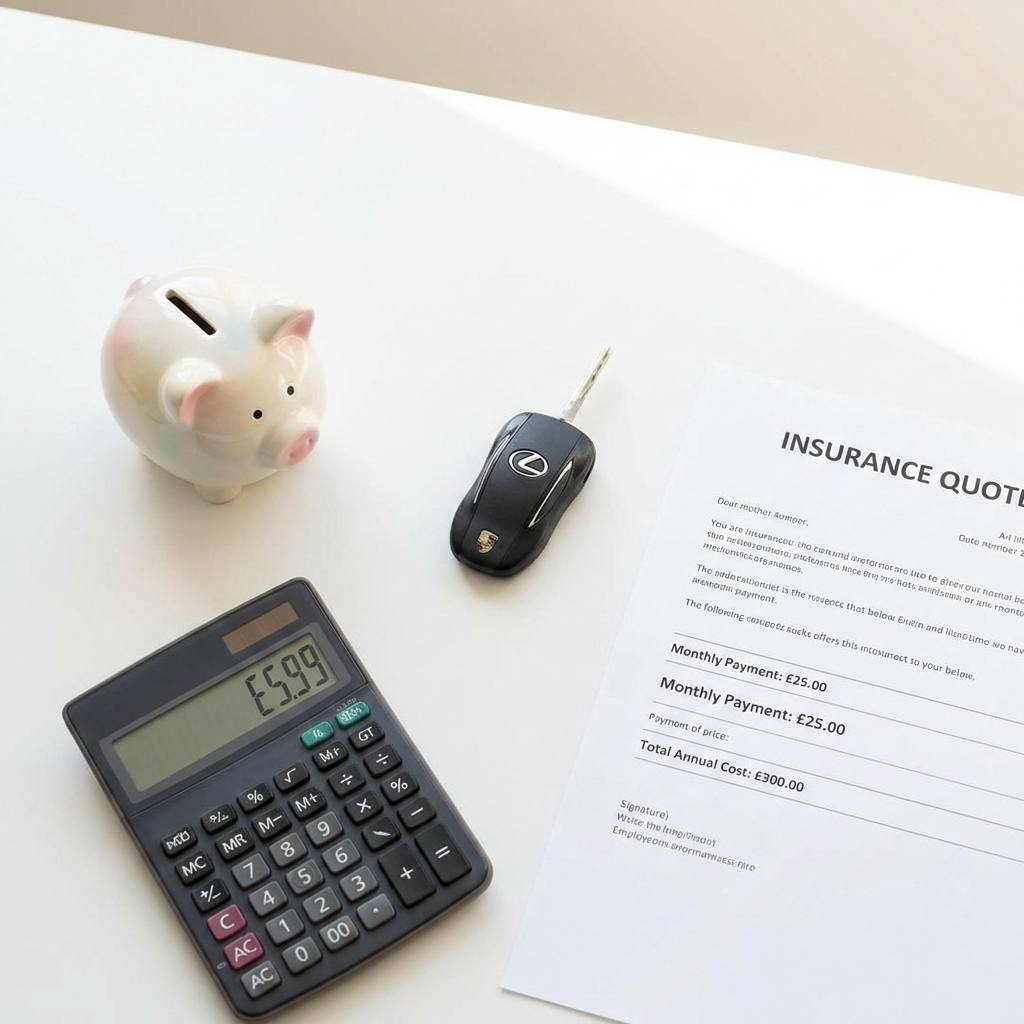
What Does "No Deposit" Car Insurance Actually Mean?
"No deposit" is a marketing term used by some insurers and brokers. It doesn't mean you pay nothing upfront. Here's what's actually happening:
- Instead of paying your full annual premium in one go, you enter a credit agreement to pay in monthly instalments
- Most policies still require an initial payment (typically 10–30% of the annual premium) to activate cover
- The remaining balance is spread across 10–12 monthly payments via direct debit
- Because you're borrowing money to pay for insurance, interest is charged: often at APRs of 15–30%
So a policy advertised as "£500 no deposit car insurance" might actually cost you £575–£650 over the year once interest is added. That's why paying annually, if you can afford it, is almost always the better deal.
Some insurers do occasionally offer 0% interest monthly payments, but these are rare and usually limited to specific products or promotional periods. Always check the total amount payable, not just the monthly figure.
Monthly vs Annual Car Insurance: Which Is Cheaper?
Annual payment is cheaper in almost every case. Here's how the numbers typically compare:
| Payment Method | Annual Premium | Total Paid Over Year | Extra Cost | |---|---|---|---| | Annual (lump sum) | £500 | £500 | £0 | | Monthly (0% interest) | £500 | £500 | £0 (rare) | | Monthly (typical ~15% APR) | £500 | ~£575 | ~£75 | | Monthly (high ~30% APR) | £500 | ~£650 | ~£150 |
These are illustrative examples, actual APRs vary by insurer and your credit score.
When monthly payments make sense
Despite costing more, monthly payments are sometimes the practical choice:
- You can't afford the full annual premium upfront, an extra £75 in interest is better than driving uninsured
- You want to spread the cost for budgeting purposes
- You're on a short-term policy and don't plan to keep the car all year
- The insurer offers a genuine 0% interest deal (always read the fine print)
If you can afford to pay annually, do. If not, compare quotes carefully and check the total amount payable, not just the headline monthly figure.
Want to compare both monthly and annual payment options? Get quotes from UK insurers and choose the payment method that works for you.
What Affects Your Car Insurance Price?
Before looking at ways to save, it helps to understand what's driving your premium. Some factors you can control; others you can't, but knowing which is which helps you focus your efforts.
| Factor | Impact on Premium | Can You Control It? | |---|---|---| | Age | High | No, but premiums drop with experience | | Car insurance group | High | Yes, choose groups 1–15 for cheaper cover | | Location/postcode | Medium–High | Limited, but garage parking helps | | Annual mileage | Medium | Yes, lower mileage = lower premium | | Claims history | High | Yes, drive carefully, protect your NCD | | Voluntary excess | Medium | Yes, higher excess = lower premium | | Payment method | Medium | Yes, annual is cheaper than monthly | | Credit score | Low–Medium | Yes, better credit can mean lower interest on monthly payments |
Your age and postcode have the biggest impact and can't easily be changed. But your choice of car, mileage, excess, and payment method are all within your control, and together they can make a difference of hundreds of pounds.
For a deeper breakdown of UK car insurance costs by age, location, and driver type, see our average car insurance cost guide.
10 Proven Ways to Lower Your Car Insurance Premium
These aren't gimmicks, they're the strategies that genuinely move the needle on what you pay.
1. Compare quotes from multiple providers
This is the single most effective thing you can do. Two insurers can look at the exact same driver profile and quote prices that differ by £200–£400. That's not a mistake, every insurer uses different pricing models and risk appetites. Compare car insurance quotes from a wide panel of providers to find the most competitive deal for your circumstances.
2. Increase your voluntary excess
Your voluntary excess is the amount you agree to pay towards a claim on top of the compulsory excess set by the insurer. Raising it from £100 to £300 or £500 can noticeably reduce your premium. But only set it at a level you could genuinely afford: a £1,000 excess is a false economy if you don't have that cash available.
3. Reduce your annual mileage estimate
The more you drive, the more exposure you have to potential accidents. If you've overestimated your annual mileage, correcting it could lower your premium. Be accurate, underestimating can cause problems if you need to claim.
4. Choose a car in a lower insurance group
Every car is assigned an insurance group from 1 to 50. Groups 1–15 are the cheapest to insure. If you're buying a new car, check the insurance group before you commit, the difference between a group 8 and a group 25 can be hundreds of pounds a year.
5. Park in a garage or driveway overnight
Where you keep your car at night matters. A locked garage is the cheapest option; a driveway is next; street parking is the most expensive. If you have a garage, make sure your policy reflects that.
6. Add an experienced named driver
Adding a more experienced driver to your policy (a parent, partner, or spouse) can sometimes reduce your premium, especially if you're a young or new driver. But be very clear: the main driver must be the person who drives the car most. Listing a parent as the main driver when it's really your car is called "fronting": it's insurance fraud and can invalidate your policy entirely. For more on how named drivers work, see our guide to letting someone else drive your car.
7. Pay annually if you can afford it
As covered above, monthly payments typically add 15–30% in interest. Paying the full year upfront is one of the simplest ways to save.
8. Build your no-claims discount
Every year you go without making a claim builds your no-claims discount (NCD). A full NCD of 5+ years can reduce your premium by up to 70% with some insurers. It's genuinely valuable, consider paying a small extra amount for no-claims protection so a single claim doesn't wipe it out.
9. Consider a telematics (black box) policy
Telematics policies monitor your driving via a small device or smartphone app. If you drive safely, steady speeds, smooth braking, limited night driving, you're rewarded with lower premiums. These are especially effective for under-25s, where they can reduce costs by 20–30%.
10. Don't auto-renew: always shop around
Your renewal quote is almost never the best deal available. Start comparing 2–3 weeks before your renewal date: this is typically the sweet spot for competitive pricing. Loyalty rarely pays in insurance.
Ready to see what you could save? Compare car insurance quotes from a panel of UK providers, it's free and takes just a few minutes.
Cheap Car Insurance for Young Drivers
If you're aged 17–24, car insurance is the single biggest cost of driving, often more expensive than the car itself. Here's what to realistically expect in 2026:
| Age | Typical Annual Premium | Notes | |---|---|---| | 17 (just passed) | £1,800–£2,500+ | Highest premiums; limited to small, low-group cars | | 18–20 | £1,400–£2,000 | Still very expensive; telematics can help significantly | | 21–24 | £1,000–£1,500 | Improving, especially with 1–2 years NCD |
These are indicative ranges, your actual quote depends on your car, location, and driving history.
Why young drivers pay so much
It's simple statistics: 17–24 year-olds are involved in a disproportionate number of accidents, particularly serious ones. Insurers price that risk into premiums. It feels unfair if you're a careful driver, but it's based on claims data from millions of policies.
How to bring costs down as a young driver
- Get a telematics (black box) policy: this is the single biggest lever for young drivers. Safe driving data can reduce premiums by 20–30% in the first year, and more over time.
- Choose a car in insurance groups 1–10: small hatchbacks like the Vauxhall Corsa, Ford Fiesta, or Volkswagen Polo are popular for a reason.
- Build your no-claims discount: even one claim-free year makes a noticeable difference.
- Don't modify your car: even cosmetic changes like alloy wheels can increase premiums. Performance modifications almost certainly will.
- Consider a named driver on your policy: adding an experienced driver can help, but they cannot be the main driver if you drive the car most. That's fronting and it's fraud.
- Pay annually if possible: ask a family member to help with the lump sum and pay them back monthly at 0% interest.
Young driver looking for affordable cover? Compare quotes now to see options from insurers who specialise in new drivers.
Cheap Car Insurance for New Drivers
New drivers face steep premiums regardless of age. If you've just passed your test at 30, you'll pay more than a 30-year-old with ten years' experience. The good news: premiums drop quickly as you build up a no-claims history.
Tips specifically for new drivers
- Start building your NCD immediately: even switching from a provisional to a full licence policy starts the clock
- Take Pass Plus or a similar course: some insurers offer discounts (though not all, so check before paying for the course)
- Accurately report low mileage: new drivers who only do a few thousand miles a year should make sure their policy reflects this
- Avoid high-powered cars: your first car should be in a low insurance group
- Compare quotes widely: pricing for new drivers varies enormously between insurers; what's expensive with one provider may be reasonable with another
Is Pay-As-You-Go Car Insurance Worth It?
Pay-as-you-go (or pay-per-mile) car insurance charges you based on how much you actually drive. You pay a base rate plus a per-mile charge, tracked via a telematics device or app.
Who it works for
- Drivers who cover fewer than 5,000 miles a year
- People who work from home and only use the car occasionally
- Second-car owners who drive the vehicle infrequently
- Anyone who wants to pay less when they drive less
Who it doesn't suit
- Regular commuters or high-mileage drivers
- People who frequently drive long distances
- Anyone uncomfortable with telematics tracking
Pay-as-you-go policies can be excellent value for low-mileage drivers, but they're not the cheapest option for everyone. As with all insurance, the best approach is to compare quotes and see how pay-as-you-go compares to a standard policy for your specific usage.
For very short-term needs, borrowing someone's car for a day, or insuring a visitor, temporary car insurance or day insurance may be a more practical option.
Types of Car Insurance Cover Explained
Whichever way you pay, you'll need to choose a level of cover. There are three main types:
Comprehensive
The most extensive (and often the most popular) cover. It protects your own vehicle as well as third parties and typically includes windscreen cover, courtesy car, personal accident cover, and fire and theft protection. Comprehensive is often cheaper than third-party only, because insurers associate third-party-only with higher-risk drivers.
Third-party, fire and theft
Covers damage to other people and their property, plus fire and theft of your own vehicle. A middle-ground option for those who want some protection for their own car without paying for full comprehensive.
Third-party only
The legal minimum in the UK. Covers damage or injury to other people and their property, but nothing for your own car. Despite being the lowest level of cover, it's not always the cheapest, get quotes for all three levels and compare.
Credit Scores and Car Insurance
Your credit score can affect your car insurance in two ways:
- Monthly payment interest rates: if you choose to pay monthly, the insurer (or their finance partner) runs a credit check. A better score typically means a lower APR, which means lower total cost.
- Premium pricing: some insurers factor credit history into their risk assessment, though this is less common in the UK than in other countries.
If you have poor credit
- You can still get car insurance, no insurer can refuse to cover you based solely on credit score
- Monthly payments may come with higher interest rates
- You might be asked for a larger initial payment
- Compare quotes widely, different insurers have different approaches to credit
- Consider paying annually if possible (no credit check needed for lump-sum payment)
- Work on improving your credit over time, check your credit report for errors, keep up with bill payments, and reduce outstanding debt
Additional Cover Options Worth Considering
Standard car insurance covers the basics, but there are add-ons that can be genuinely useful:
- Breakdown cover: roadside assistance if your car breaks down; can be cheaper when bundled with your insurance
- Legal protection: covers legal fees if you need to pursue a claim after an accident
- No-claims discount protection: a small extra cost to protect your NCD from being wiped out by a single claim
- Key cover: replacement keys and locks if lost or stolen
- Courtesy car: a temporary replacement while your car is being repaired
Don't add extras you won't use, but do consider breakdown cover and NCD protection, these offer genuine value for most drivers.
Frequently Asked Questions
What is "no deposit" car insurance?
"No deposit" car insurance means you pay in monthly instalments rather than a single lump sum. Despite the name, most policies still require an initial payment (typically 10–30% of the annual premium) to activate cover. Monthly payments involve a credit agreement and usually cost more overall due to interest charges.
Is it cheaper to pay car insurance monthly or annually?
Annually is almost always cheaper. Monthly payments typically add 15–30% in interest charges. For example, a £500 annual premium could cost £575–£650 if paid monthly. If you can afford the lump sum, paying upfront saves real money.
How can I get the cheapest car insurance possible?
Compare quotes from multiple providers, this is the single most effective step. Beyond that: choose a car in a low insurance group, accurately report your mileage, increase your voluntary excess, pay annually, build your no-claims discount, and consider a telematics policy if you're a young driver.
Does my credit score affect my car insurance?
Your credit score primarily affects the interest rate on monthly payments, a better score means lower APR. Some insurers also factor credit history into premium pricing, though this is less common. Poor credit doesn't prevent you from getting insured, but it may increase your costs.
Is comprehensive insurance really cheaper than third-party?
It can be, yes. Many insurers view third-party-only drivers as higher risk, which pushes premiums up. Always get quotes for both comprehensive and third-party cover, you may find that comprehensive is actually the cheaper option while providing far more protection.
What's the cheapest car insurance for a 17-year-old?
Expect to pay £1,800–£2,500+ per year. The best strategies to reduce this: choose a car in insurance groups 1–10, get a telematics policy, avoid modifications, and build your no-claims discount from day one.
Can I get car insurance with no credit check?
If you pay annually in full, there's generally no credit check required. Credit checks are associated with monthly payment plans because they involve a credit agreement. Paying upfront avoids this entirely.
MySupermarketCompare earns commission when you purchase insurance through our comparison tool. This doesn't affect our editorial content or the quotes you see.
Sources & References
- Insurance guidance – MoneyHelper (FCA-backed): government-backed consumer guidance on buying car insurance, your rights, and what to look for
- Vehicle insurance – GOV.UK: legal requirements for vehicle insurance in the UK
- Association of British Insurers (ABI): industry data on average premiums, claims trends, and insurance market analysis
- Industry pricing data referenced in this guide is based on comparative analysis from UK insurance comparison platforms and ABI reports as of early 2026